
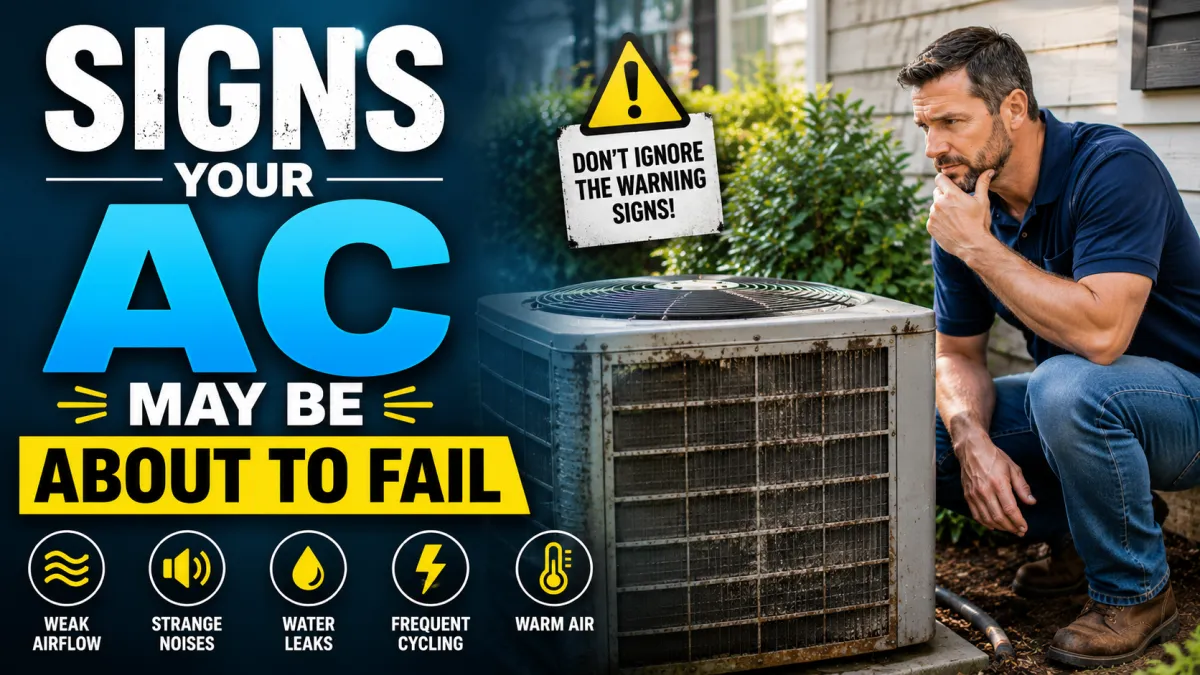
Signs Your AC May Be About to Fail
Signs Your AC May Be About to Fail: Identifying Early Symptoms and Taking Action

By Slaidel Hernandez, Service Pro Nation
As a critical component of home comfort, air conditioning units can sometimes show signs of impending failure. Recognizing these signs early can save homeowners from costly repairs and uncomfortable situations. This article will explore the various symptoms that indicate your AC may be on the verge of failure, including unusual noises, frost buildup, and poor airflow. By understanding these warning signs, you can take proactive measures to address potential issues before they escalate. We will also discuss recommended actions to take when these symptoms arise, ensuring you are well-prepared to maintain your home's cooling system effectively.
The broader field of HVAC maintenance is increasingly exploring automated methods for fault detection by analyzing system symptoms.
Automated HVAC Fault Detection via Symptoms
features around HVAC systems as symptoms and diagnose their. This may help the model recognize HVAC system behaviors in. This is a common problem in HVAC system behaviors.
Deep learning-driven automated fault detection and diagnostics based on a contextual environment: A case study of HVAC system, K Haruehansapong, 2023
Unusual Noises

Unusual noises from your air conditioning unit can be a clear indicator of underlying issues. These sounds may include grinding, squealing, or hissing, each suggesting different problems. For instance, grinding noises often indicate a problem with the motor or bearings, while squealing may point to a worn-out belt. Hissing sounds can suggest a refrigerant leak, which requires immediate attention. If you notice any of these noises, it is essential to call a professional to diagnose and resolve the issue promptly.
Frost Buildup

Frost buildup on your AC unit is another sign that something may be wrong. This phenomenon typically occurs when the airflow is restricted, causing the evaporator coil to freeze. Common causes include dirty air filters, blocked ducts, or low refrigerant levels. If you observe frost on your unit, it is crucial to turn off the system and allow it to thaw. Continuing to operate the AC in this state can lead to further damage. Consulting a professional can help identify the root cause and prevent future occurrences.
Tripping Circuit Breaker
If your air conditioning unit frequently trips the circuit breaker, it may indicate an electrical issue or an overloaded system. This problem can arise from various factors, including faulty wiring or a malfunctioning compressor. When the circuit breaker trips, it is a safety measure to prevent overheating and potential fires. If this happens repeatedly, it is advisable to contact a qualified technician to inspect the system and address any electrical concerns.
Poor Airflow
Poor airflow from your AC can significantly impact its efficiency and your comfort level. This issue may manifest as weak or inconsistent airflow from the vents. Common causes include clogged air filters, blocked ducts, or issues with the blower fan. Regular maintenance, such as changing filters and cleaning ducts, can help prevent airflow problems. If you notice persistent poor airflow, it may be time to consult a professional to assess the situation and recommend appropriate solutions.
Water Pooling
Water pooling around your air conditioning unit is a concerning sign that should not be ignored. This issue often indicates a clogged drain line or a refrigerant leak. If the drain line is blocked, it can cause water to back up and leak out of the unit. On the other hand, a refrigerant leak can lead to low refrigerant levels, affecting the system's cooling efficiency. If you notice water pooling, it is essential to turn off the unit and seek professional assistance to prevent further damage.
Specifically, the detection of refrigerant leaks is a critical aspect of AC maintenance, with advanced systems now incorporating AI for diagnosis.
AC Refrigerant Leak Detection & AI Diagnosis
refrigerant leak detection methods, and a refrigerant leak detection and fault diagnosis system based on artificial intelligence and real-time performance monitoring of the refrigeration system.
Fault diagnosis and refrigerant leak detection in vapour compression refrigeration systems, SA Tassou, 2005
Strange Smells
Strange smells emanating from your air conditioning unit can signal various problems. A musty odor may indicate mold or mildew growth within the system, while a burning smell could suggest electrical issues or overheating components. If you detect any unusual smells, it is crucial to turn off the AC and investigate the source. Ignoring these odors can lead to more severe issues, including health risks from mold exposure or fire hazards from electrical malfunctions.
Hot Air Blowing
If your air conditioning unit is blowing hot air instead of cool air, it is a clear sign of trouble. This issue can arise from several factors, including a malfunctioning thermostat, low refrigerant levels, or a broken compressor. To troubleshoot, check the thermostat settings and ensure they are set to cool. If the problem persists, it is advisable to contact a professional technician to diagnose and repair the issue.
Recommended Actions
When you notice any of the signs mentioned above, taking prompt action is essential to prevent further damage to your AC unit. Here are some recommended actions:
Turn Off the Unit: If you observe any unusual signs, turn off the AC to prevent further damage.
Check Filters and Ducts: Regularly inspect and replace air filters, and ensure ducts are clean and unobstructed.
Call a Professional: For persistent issues, contact a qualified HVAC technician to diagnose and repair the problem.
After identifying these symptoms, homeowners may consider connecting with local service professionals for assistance.Service Pro Nationserves as a lead generation and information hub, helping homeowners find reliable HVAC services in their area.
What Are the Most Common Signs Your AC Is Not Cooling Properly?
When your AC fails to cool effectively, several common signs may indicate the problem:
Inconsistent Temperatures: Rooms are not cooling evenly, with some areas warmer than others.
Increased Energy Bills: A sudden spike in energy costs may suggest your AC is working harder than usual.
Frequent Cycling: The unit turns on and off more frequently than normal, indicating potential issues.
Recognizing these signs early can help you address problems before they escalate.
How Does Warm Air Indicate AC Unit Failure?
Warm air blowing from your AC unit is a significant indicator of potential failure. This issue can arise from several factors, including a malfunctioning compressor, low refrigerant levels, or a faulty thermostat. When the compressor fails, it cannot effectively circulate refrigerant, leading to warm air being blown into your home. If you experience this issue, it is crucial to consult a professional technician to diagnose and resolve the problem.
What Does an Air Conditioner Making Noise Reveal About Its Condition?
An air conditioner making unusual noises can reveal a lot about its condition. Different sounds indicate different issues; for example, a rattling noise may suggest loose parts, while a high-pitched squeal could indicate a failing motor. Understanding these sounds can help homeowners take timely action to prevent further damage. If you hear any concerning noises, it is advisable to contact a professional for an inspection.
How to Diagnose HVAC System Breakdown Signs Effectively?
Diagnosing HVAC system breakdown signs involves observing various symptoms and understanding their implications. Homeowners should pay attention to:
Unusual Noises: Listen for any strange sounds that may indicate mechanical issues.
Temperature Fluctuations: Monitor for inconsistent cooling throughout the home.
Increased Energy Consumption: Be aware of rising energy bills that may signal inefficiency.
By recognizing these signs, homeowners can take proactive steps to address potential breakdowns.
Further research emphasizes the importance of understanding the underlying causes of HVAC system deviations through effective fault detection and diagnosis.
Residential HVAC Fault Detection & Diagnosis Review
diagnosis is the identification of the cause of the deviation. To forestall the impact or persistence of faults, studies on faults in residential HVAC systems were surveyed.
Review of fault detection and diagnosis studies on residential HVAC systems, KA Ejenakevwe, 2021
Which Diagnostic Steps Identify AC Compressor and Condenser Issues?
Identifying issues with the AC compressor and condenser requires a systematic approach. Key diagnostic steps include:
Visual Inspection: Check for any visible signs of damage or wear on the compressor and condenser.
Electrical Testing: Use a multimeter to test electrical connections and ensure proper voltage.
Refrigerant Levels: Measure refrigerant levels to determine if they are within the recommended range.
These steps can help pinpoint issues and guide necessary repairs.
How to Detect AC Unit Leaking Water and Its Implications?
Detecting water leaks from your AC unit is crucial for preventing damage. Signs of leaks include:
Water Puddles: Noticeable pooling of water around the unit.
Dampness: Increased humidity levels in the area surrounding the AC.
Mold Growth: Visible mold or mildew near the unit.
If you suspect a leak, it is essential to turn off the unit and contact a professional to assess the situation.
When Should You Request Emergency AC Repair Services?
Emergency AC repair services should be requested when you experience:
Complete System Failure: The unit is not functioning at all.
Severe Water Leaks: Significant water pooling that could cause damage.
Electrical Issues: Frequent tripping of circuit breakers or burning smells.
In these situations, prompt action can prevent further damage and ensure your home remains comfortable.
What Are the Critical Failure Signs Requiring Immediate HVAC Repair?
Critical failure signs that require immediate HVAC repair include:
Unusual Noises: Grinding or screeching sounds indicating mechanical failure.
Frost Buildup: Ice forming on the unit, suggesting airflow issues.
Hot Air Blowing: The unit fails to cool, indicating potential compressor issues.
Recognizing these signs early can help prevent costly repairs and ensure your system operates efficiently.
How Does Service Pro Nation Connect Homeowners to Local Emergency HVAC Professionals?
Service Pro Nation connects homeowners to local emergency HVAC professionals by providing a streamlined platform for finding reliable services. Homeowners can easily access information about qualified technicians in their area, ensuring they receive prompt assistance when needed. This service simplifies the process of finding help, allowing homeowners to focus on resolving their HVAC issues quickly.
What Preventative HVAC Maintenance Tips Can Extend Your AC Unit’s Lifespan?
Preventative maintenance is essential for extending the lifespan of your AC unit. Key tips include:
Regular Filter Changes: Replace air filters every 1-3 months to maintain airflow.
For more comprehensiveHVAC services, schedule professional inspections to identify potential issues early.
Clean Coils and Ducts: Ensure coils and ducts are clean to optimize efficiency.
Implementing these maintenance practices can help keep your AC running smoothly for years to come.
Which Routine Checks Help Detect Early AC Failure Symptoms?
Routine checks that can help detect early AC failure symptoms include:
Inspecting Air Filters: Regularly check and replace filters to ensure proper airflow.
Monitoring Thermostat Settings: Ensure the thermostat is functioning correctly and set to the desired temperature.
Checking for Unusual Noises: Listen for any strange sounds that may indicate mechanical issues.
By performing these checks, homeowners can catch potential problems before they escalate.
How Does Regular Maintenance Reduce Emergency Repair Needs?
Regular maintenance significantly reduces the likelihood of emergency repairs by addressing potential issues before they become severe. Routine inspections and servicing can identify worn components, clean coils, and ensure proper refrigerant levels. This proactive approach not only enhances the efficiency of the system but also extends its lifespan, ultimately saving homeowners money on costly repairs.
When Is It Time to Replace Your AC Unit Instead of Repairing?
Determining when to replace your AC unit instead of repairing it involves considering several factors:
Age of the Unit: If the unit is over 10-15 years old, replacement may be more cost-effective.
Frequent Repairs: If you find yourself frequently repairing the unit, it may be time for a new one.
Inefficiency: If the unit is no longer cooling effectively or is consuming excessive energy, replacement may be warranted.
Evaluating these factors can help homeowners make informed decisions about their HVAC systems.
What Are the Indicators That AC Repair Is No Longer Cost-Effective?
Indicators that AC repair is no longer cost-effective include:
High Repair Costs: If repair costs exceed 50% of the unit's value, consider replacement.
Frequent Breakdowns: Regular issues may indicate the unit is nearing the end of its lifespan.
Rising Energy Bills: Increased energy consumption can signal inefficiency, making replacement a better option.
Recognizing these indicators can help homeowners avoid unnecessary expenses and ensure their comfort.
How Do New HVAC Technologies Influence Replacement Decisions?
New HVAC technologies significantly influence replacement decisions by offering enhanced efficiency and performance. Modern systems often feature advanced thermostats, variable-speed compressors, and improved refrigerant options, leading to lower energy consumption and better cooling capabilities. Homeowners should consider these advancements when evaluating their options, as investing in a new system can lead to long-term savings and improved comfort.
To findHVAC professionalsin your area, consider exploring resources like Service Pro Nation, which can connect you with trusted providers.
Frequently Asked Questions
What should I do if my AC unit is making strange noises?
If your AC unit is producing unusual sounds, it's essential to address the issue promptly. Different noises can indicate various problems; for instance, grinding may suggest motor issues, while hissing could indicate a refrigerant leak. First, turn off the unit to prevent further damage. Then, contact a qualified HVAC technician to diagnose the problem. Ignoring these sounds can lead to more severe issues and costly repairs, so timely action is crucial.
How can I prevent my AC from freezing up?
To prevent your AC unit from freezing, ensure proper airflow by regularly changing air filters and cleaning ducts. Blocked airflow can cause the evaporator coil to freeze, leading to inefficient cooling. Additionally, check refrigerant levels, as low refrigerant can also contribute to freezing. Scheduling regular maintenance with a professional can help identify potential issues before they escalate, ensuring your system operates efficiently throughout the cooling season.
What are the signs that indicate I need to replace my AC unit?
Signs that it may be time to replace your AC unit include frequent breakdowns, rising energy bills, and inconsistent cooling. If your unit is over 10-15 years old and requires costly repairs, replacement might be more cost-effective. Additionally, if the system is no longer efficient or fails to cool your home adequately, investing in a new unit can enhance comfort and reduce energy costs in the long run.
How often should I schedule maintenance for my AC unit?
It is recommended to schedule maintenance for your AC unit at least once a year, ideally before the cooling season begins. Regular maintenance helps identify potential issues, clean components, and ensure the system operates efficiently. Some homeowners may benefit from biannual checks, especially in regions with extreme temperatures. Consistent maintenance can extend the lifespan of your unit and reduce the likelihood of emergency repairs.
What should I do if my AC is blowing hot air?
If your AC unit is blowing hot air, first check the thermostat settings to ensure it is set to cool. If the settings are correct, the issue may stem from low refrigerant levels, a malfunctioning compressor, or a faulty thermostat. Turn off the unit to prevent further damage and contact a professional technician for diagnosis and repair. Addressing this issue promptly can help restore comfort and prevent additional complications.
Can I troubleshoot AC issues myself, or should I always call a professional?
While some minor issues, like changing air filters or checking thermostat settings, can be handled by homeowners, most AC problems require professional expertise. Attempting to fix complex issues, such as electrical problems or refrigerant leaks, can be dangerous and may void warranties. If you notice persistent issues or unusual symptoms, it's best to consult a qualified HVAC technician to ensure safe and effective repairs.
What are the benefits of using a professional HVAC service?
Using a professional HVAC service offers numerous benefits, including expert diagnosis, efficient repairs, and peace of mind. Professionals have the training and tools to identify underlying issues that may not be apparent to homeowners. They can also provide regular maintenance, ensuring your system runs efficiently and prolonging its lifespan. Additionally, professional services often come with warranties, protecting your investment and ensuring quality workmanship.


